


CARD Ghana hands over community irrigation system to boost livelihoods, reduce irregular migration in Konjiahi
- Aminu Ibrahim
- 11 minutes ago
- 3 min read

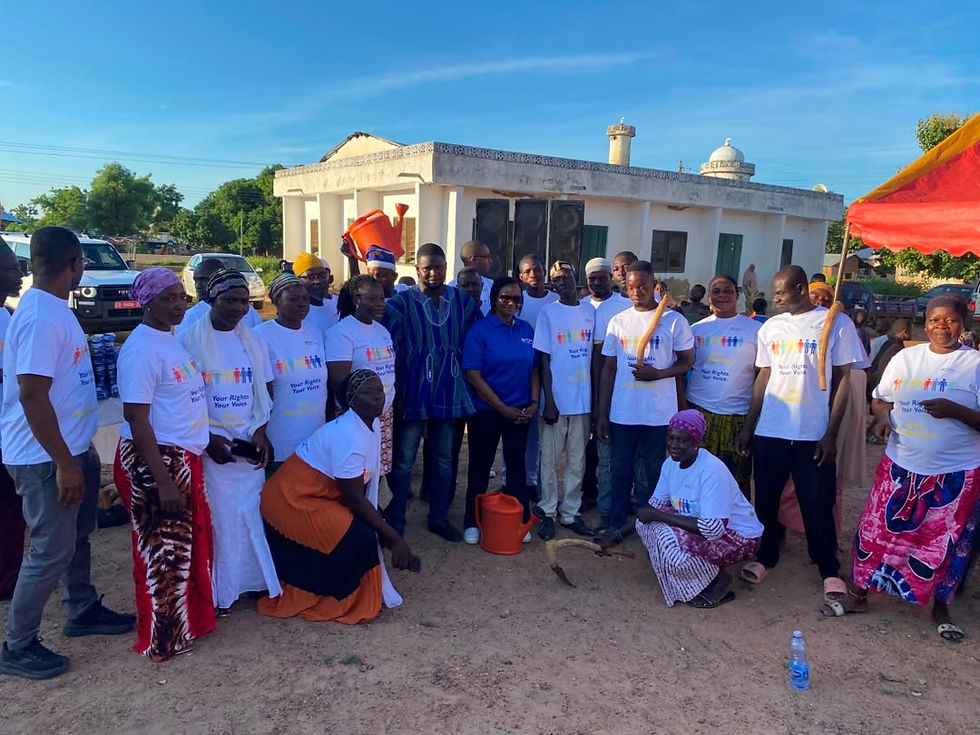
Community Aid for Rural Development (CARD Ghana), in partnership with the International Organization for Migration (IOM), the German Development Cooperation (GIZ) and the Government of Ghana, has commissioned and handed over a one-acre community drip irrigation system to the people of Konjiahi in the Wa Municipality to strengthen livelihoods, build community resilience and help curb irregular migration.
The facility, handed over on July 10, 2026, is expected to provide year-round farming opportunities, particularly for women and young people, enabling them to earn incomes during the dry season when agricultural activities are often limited.
It formed part of the FOSTERING project, an initiative funded by IOM with support from GIZ, implemented by CARD Ghana in the Bono Region (Awiakrom, Dorma West) and Upper West Region (Konjiahi, Wa Municipal) of Ghana.
Executive Director of CARD Ghana, Al-hassan Hudi, described the project as a milestone in promoting sustainable livelihoods and community resilience, saying the intervention extends beyond infrastructure to strengthening the capacities of beneficiaries.
According to him, CARD Ghana had worked with the community through a series of capacity-building programmes before the construction of the irrigation facility, equipping beneficiaries with entrepreneurial and agricultural skills needed to sustain the project.
"This initiative is not just about what we are handing over today. It started with identifying the community's capacity needs and providing several trainings to ensure beneficiaries have the knowledge to sustain and expand this intervention," Mr. Hudi said.
He noted that although more than 30 farmers are direct beneficiaries, the wider community stands to benefit through improved household incomes, food production and long-term economic opportunities.
"Our hope is that during the dry season, farmers in Konjiahi will have meaningful work to do instead of leaving the community in search of livelihoods elsewhere," he added.
Speaking on behalf of the Chief of Konjiahi, Assembly Member for the Guli Electoral Area, Osman Fatawu, described the irrigation scheme as a transformative investment that would improve food production, create employment and reduce youth migration.
"One of the greatest benefits of this project is that it will help reduce youth migration by creating meaningful livelihoods here at home. When our young people have opportunities to work and earn a decent living, they will stay and contribute to the development of the community," he said.
He urged beneficiaries to protect and properly maintain the facility to ensure it serves future generations.
Chief of Mission of the International Organization for Migration (IOM) for Ghana, Togo and Benin, Fatou Diallo Ndiaye, said the community garden represents a shared commitment by development partners, government institutions and the community to strengthen resilience in migration-affected communities.
She explained that the project was designed to create economic opportunities, improve food security and support environmentally sustainable livelihoods for both returnee migrants and host community members.
"This facility demonstrates the value of partnership. It is about creating opportunities for the youth so they do not feel compelled to follow irregular migration routes," she said.
Ms. Ndiaye encouraged the community to maintain the facility and preserve the strong collaboration that made the project possible.
"We want people to remain here because Ghana is a beautiful country and Wa [Konjiahi] is part of that beautiful country. Our goal is to continue supporting communities to build resilience and create opportunities where people live," she said.
Technical Advisor at GIZ, Ruth Mansah Mensah, said the project symbolizes what can be achieved when development partners, local authorities and communities work towards a common objective.
She stressed that the project's success would ultimately be determined not by its completion but by how well the community manages and sustains it.
"The success of this facility will be measured by how often it is used, how well it is maintained and the lives it continues to improve over the years," she said.
Ms. Mensah also encouraged beneficiaries, particularly returnee migrants and young people, to take advantage of services offered by the Public Employment Centre in Wa, including skills development, labour market information and career support.
Community members, particularly women expected to benefit from the irrigation scheme, welcomed the project, expressing optimism that it would provide a reliable source of income throughout the year.
They said access to irrigation farming would reduce the need for seasonal migration in search of work, allowing families to remain together while earning sustainable livelihoods within the community.
Some noted that the project could help discourage young people from engaging in illegal mining and reduce the number of women travelling to southern Ghana to work as head porters during the dry season.


Comments